
A Complete Buyer’s Guide to Nurse Call System Services in India

When a patient presses a call button in a hospital ward, every second counts. The signal has to reach the right nurse instantly, with no missed alerts and no confusion about which bed needs attention. A dependable Nurse Call System makes this possible by linking patients, nurses and ward stations through one reliable communication network. As hospitals, nursing homes, clinics and senior-care facilities expand across India, choosing the right system has become a major decision for administrators and facility managers. This guide explains how these systems work, what to compare before buying, and how to select a trusted service partner.
What Is a Nurse Call System and How Does It Work?
A nurse call setup is an electronic communication solution that lets patients request help without leaving their bed. The patient presses a button on a bedside unit, pull cord or pillow speaker, and the request is routed to the nurse station, a corridor display or the staff’s handheld devices. In a modern Nurse Call System, nurses can often speak with the patient directly, see the priority of the call and know exactly which room it came from. Calls from bathrooms and emergency code buttons are treated as high priority, so the most urgent cases always get attention first.
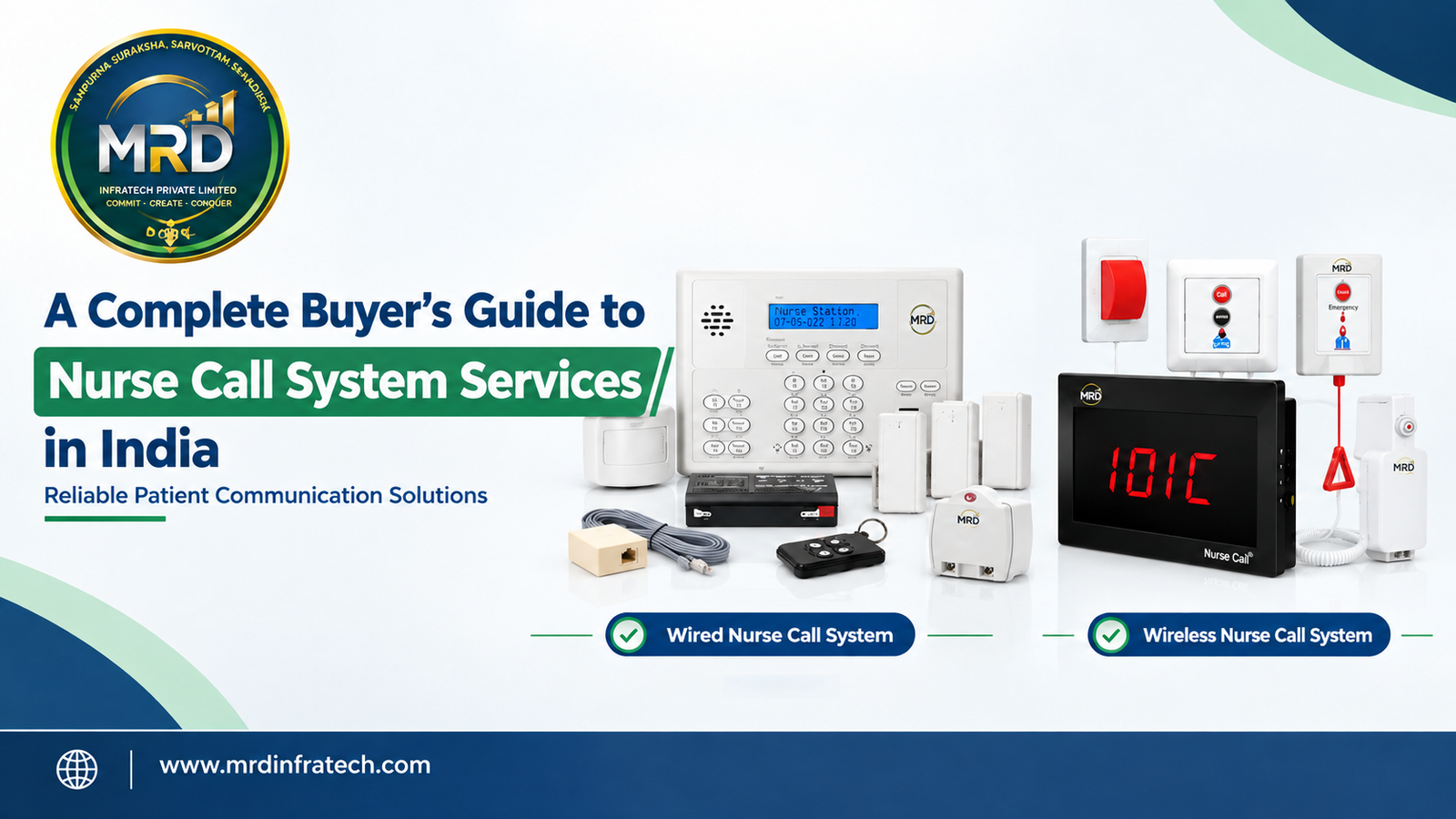
Core Components of a Nurse Call System
Although designs differ, most installations include the following parts:
- Patient bedside units, pull cords and pillow speakers
- Bathroom and toilet emergency stations
- Corridor dome lights that show call status outside each room
- A master nurse station with display and audio
- Staff handsets, pagers or mobile devices for alerts
- Cabling, power supplies and network switches
- Reporting software that logs call and response times
The quality of the cabling and power infrastructure matters as much as the devices themselves. This is why a provider with strong Extra Low Voltage (ELV) experience has a real advantage over a supplier who only sells hardware.
Types of Nurse Call Systems Available in India
Buyers in India generally choose from three categories, depending on facility size and budget.
Conventional Wired Systems
These use a simple lamp-and-buzzer approach. A patient call lights up a lamp outside the room and sounds a tone at the nurse station. They are cost-effective and easy to maintain, which suits small nursing homes and clinics with a limited number of rooms. The trade-off is limited reporting and no voice communication.
Audio and Audio-Visual Systems
These add two-way voice communication between the patient and the nurse station. Staff can understand the patient’s need before walking to the room, which saves time and reduces unnecessary trips. This type works well for mid-size hospitals and multi-bed wards.
IP-Based and Wireless Systems
These run over the facility’s network and send alerts to mobile devices carried by nurses. They offer detailed analytics, easy expansion and integration with other building systems. For large hospitals and multi-building campuses, this is usually the most future-ready option.
Key Features to Look for Before You Buy
Not every system suits every facility. Use this checklist when comparing options:
- Two-way audio communication between patient and staff
- Multiple priority levels, including an emergency or code-blue alert
- Bathroom and toilet emergency stations with reset only from the room
- Scalability, so you can add beds or wards later
- Call logs and reports to track response times
- Battery backup so the system keeps working during power cuts
- Hygienic, easy-to-clean devices suitable for clinical areas
- Compatibility with fire alarm, CCTV and building management systems
During vendor demonstrations, ask how the Nurse Call System behaves during a power failure or network interruption. A system that stops working at the wrong moment defeats its entire purpose, so this one question can reveal a lot about build quality.
Nurse Call System Cost Factors in India
There is no single fixed price, because every hospital layout and requirement is different. The final cost depends mainly on these factors:
- Total number of beds and rooms
- System type: conventional, audio-visual or IP-based
- Number of staff handsets and display units
- Building layout, ceiling type and cabling distance
- Software, reporting and integration requirements
- Annual maintenance contract (AMC) terms
Always compare the total cost of ownership, not just the purchase price. A cheaper system with poor support can cost far more over five years through repairs, downtime and replacements. Ask for an itemised quotation so you can see exactly what is included. You can also review the price list or request a quote from MRD Infratech to understand realistic budgets.
Nurse Call System Installation and Maintenance
Installation is where many projects succeed or fail. A proper process includes a site survey, system design, cabling, device mounting, programming, testing and staff training. A poorly installed Nurse Call System can cause false alarms, delayed alerts or dead zones in corridors and bathrooms. After handover, regular preventive maintenance keeps buttons, speakers and cables in working order. An AMC with a clear response time gives you peace of mind and protects your investment.
Integrating Nurse Call with Other Hospital Safety Systems
Hospitals rarely rely on a single system. Patient safety depends on several technologies working together, and integration brings real benefits:
- Fire alarm systems that coordinate with ward alerts during emergencies
- CCTV surveillance for corridors, entrances and restricted areas
- Access control to protect pharmacies, ICUs and operation theatres
- Public address and voice alarm systems for announcements
- Building management systems for centralised monitoring
- Structured networking that carries IP-based call data reliably
When one partner handles all of these, you avoid compatibility issues and finger-pointing between vendors. MRD Infratech specialises in seamless multi-OEM integration across fire detection, CCTV surveillance, access control and building management systems.
How to Choose the Right Service Provider
The provider you select matters as much as the product. Look for these qualities:
- Proven experience in healthcare or other critical environments
- Certified engineers who can design, install and commission the system
- Use of reliable technology brands with genuine warranty
- Clear documentation, testing reports and staff training
- Responsive after-sales support and a transparent AMC
- Ability to customise the design to your building and workflow
Ask for references and visit an existing installation if possible. A trustworthy provider will welcome these questions and answer them openly.
Why Choose MRD Infratech for Nurse Call Solutions
MRD Infratech Private Limited delivers end-to-end ELV and life safety solutions for industrial, commercial, residential and infrastructure projects. The team follows a complete process, from customised system architecture to proactive project management and final commissioning. With a strong focus on quality workmanship and dependable support, MRD Infratech helps healthcare facilities build safer, smarter environments. Explore the Nurse Call Systems range to see available solutions.
Final Thoughts
Patient care depends on fast, accurate communication, and the right technology removes guesswork from daily ward operations. Investing in a well-planned Nurse Call System improves response times, supports nursing staff and gives patients and families greater confidence in your facility. Define your requirements, compare system types, check the total cost of ownership and choose a partner who offers both quality installation and long-term support. With the right guidance, your facility can build a communication backbone that serves patients reliably for years.