The Ultimate Guide to Building Management System Services in Delhi

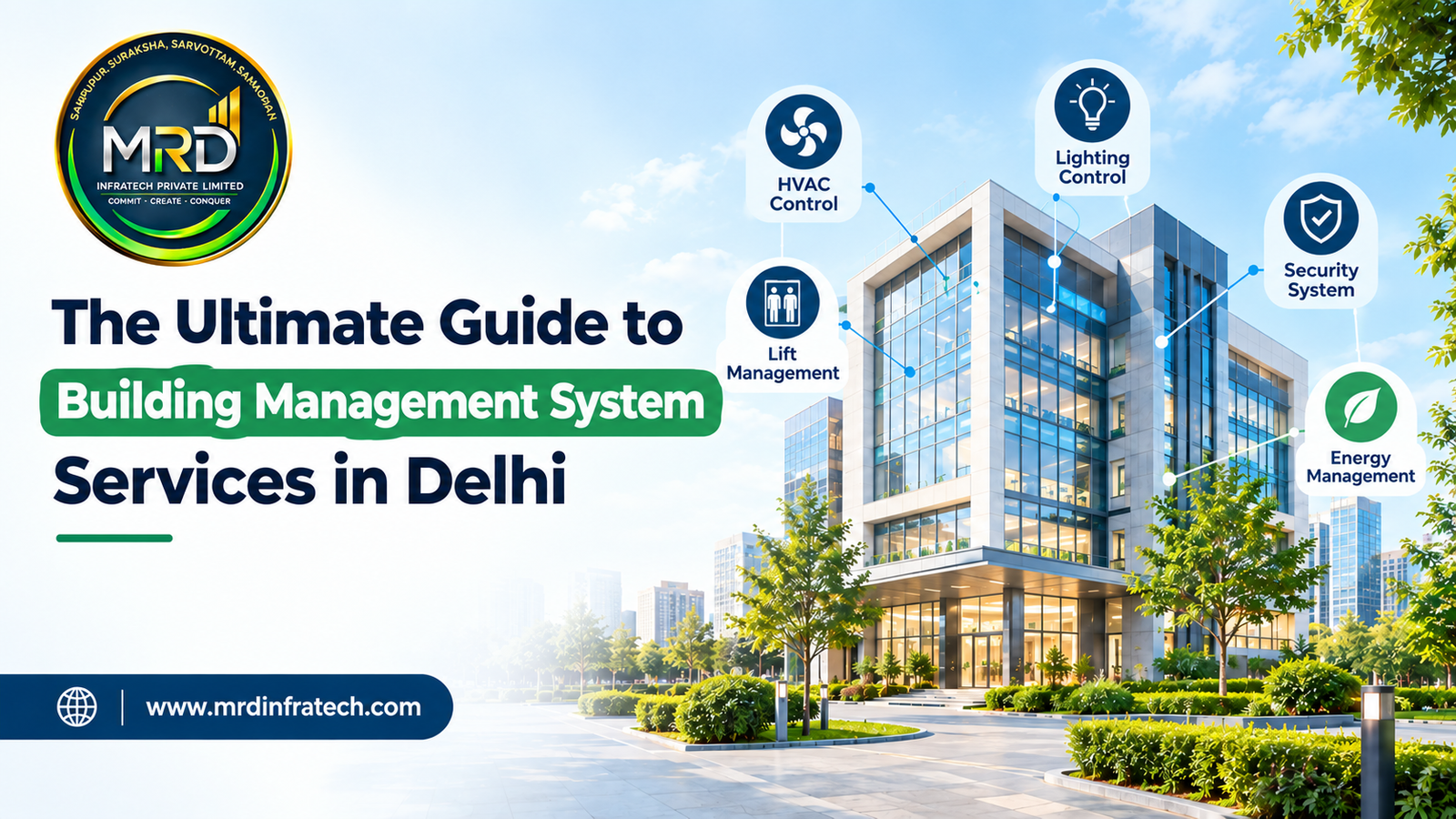
Delhi’s skyline grows taller and more complex every year. Office towers, shopping centres, hospitals, hotels and warehouses across the NCR all face the same challenges: rising electricity bills, ageing equipment and the constant need to keep occupants safe and comfortable. A Building Management System solves these problems by bringing HVAC, lighting, plumbing and energy data onto a single intelligent platform. This guide explains how it works, which services are available, what benefits to expect and how to choose the right partner in Delhi.
What Is a Building Management System and How Does It Work?
A Building Management System, often called a building automation system or BMS, is a centralized platform that monitors and controls a property’s mechanical and electrical services. Instead of walking through plant rooms to check equipment, facility teams can see live conditions, receive alerts and adjust operating schedules from one dashboard.
The system works through a simple chain. Sensors collect data such as temperature, pressure, water level and power usage. Controllers process that data and operate equipment according to programmed logic. Supervisory software then displays everything in a visual interface, stores historical trends and sends notifications the moment something goes wrong.
Core Components of a Building Management System
Every BMS installation, whether small or large, is built from the same essential elements:
- Field devices: sensors, actuators, meters and valves that read and control conditions.
- Controllers: programmable units that run the automation logic for each system.
- Network: the cabling and communication protocols that link devices to the central platform.
- Supervisory software: the dashboard where operators monitor, analyze and report.
- Alarm engine: real-time alerts for faults and abnormal operating conditions.
A well-engineered design ensures these layers work together smoothly and can be expanded later as your property grows.
Building Management System Services Available in Delhi
A complete BMS is not one product but a group of connected services. MRD Infratech’s building automation portfolio covers the following.
BMS Monitoring Dashboard
The dashboard visualizes live system conditions, alarms, historical trends, equipment status and operational reports in one intuitive screen. It is the control room of your entire building.
HVAC Monitoring System
Air conditioning is usually the biggest energy consumer in a commercial property. HVAC monitoring tracks temperatures, ventilation, pressure levels and plant-room performance so problems are caught before they become breakdowns.
Lighting Monitoring System
Automated schedules, occupancy-based operation and dimming controls ensure lights run only when and where they are needed, cutting waste without affecting comfort.
Plumbing Monitoring System
Water tanks, pumps, pressure, flow and drainage conditions are tracked continuously, which reduces the risk of overflows, dry-running pumps and costly water damage.
Energy Management System
Smart metering, demand analysis and automated reporting help you measure, analyze and optimize electricity consumption across the property.
Benefits of a Building Management System for Delhi Properties
The main reason owners invest in a Building Management System is the measurable improvement in cost, reliability and comfort. Delhi’s climate makes this especially relevant, with summer temperatures that regularly cross 40°C and cold winters that push heating and ventilation loads in the opposite direction. Intelligent control keeps indoor conditions stable through every season.
The key advantages include:
- Lower energy consumption: optimized equipment schedules reduce unnecessary power use.
- Faster fault detection: real-time alarms flag equipment failures and abnormal conditions immediately.
- Improved performance: trend data and analytics help you tune equipment for better efficiency.
- Better occupant comfort: temperature, ventilation and lighting stay consistent throughout the facility.
- Remote access: managers can check system status without being on site.
Over time, these gains reduce maintenance surprises, extend equipment life and give property owners clear data for budgeting and planning.
Which Properties Need BMS Solutions in Delhi?
Any facility with multiple technical systems benefits from centralized control. The most common applications include commercial office buildings, hospitals, hotels, industrial plants, educational campuses, shopping centres, warehouses and large residential complexes. In a hospital, for example, stable temperature and reliable plumbing are critical. In a mall, lighting and HVAC drive most of the operating cost. The technology is the same, but the configuration is tailored to the building.
How MRD Infratech Delivers Building Management System Services in Delhi
MRD Infratech is an engineering and technology integration firm based in Rohini, Delhi, delivering end-to-end ELV and life safety solutions for industrial, commercial and residential sectors. Our Building Management System projects follow a clear four-step process:
- Site assessment: we evaluate your existing equipment and control requirements.
- System engineering: we prepare the automation architecture and control logic.
- Integration and commissioning: we connect equipment, test controls and configure dashboards.
- Monitoring and support: we provide performance tracking, maintenance assistance and upgrades.
Because we also handle fire detection, CCTV surveillance, access control and networking, we can design a BMS that works alongside your other building systems rather than in isolation. Our team works with multiple technology platforms and partners with trusted brands such as Honeywell, so your system is not locked into a single vendor.
How to Choose the Right BMS Service Provider in Delhi
Not every provider offers the same depth of service. Use this checklist when comparing options:
- Proven engineering capability: look for a team that designs the system, not just supplies hardware.
- Multi-vendor integration: make sure the provider can connect equipment from different manufacturers.
- Scalability: the platform should be able to expand as your building or portfolio grows.
- Clear reporting: dashboards and reports should be easy for your facility team to understand.
- After-sales support: ongoing maintenance and upgrades matter as much as installation.
- Local presence: a Delhi-based team can respond quickly when issues arise.
Ask for a site assessment before you commit. A reputable provider will study your building first and recommend only what you actually need.
Conclusion: Make Your Building Smarter Today
Rising energy costs and growing operational complexity are not going away, and the properties that manage them best will be the ones with the clearest data and the fastest response. Investing in a Building Management System is one of the most practical ways to cut waste, protect equipment and keep occupants comfortable. With the right partner, the transition is smooth and the returns are measurable.