

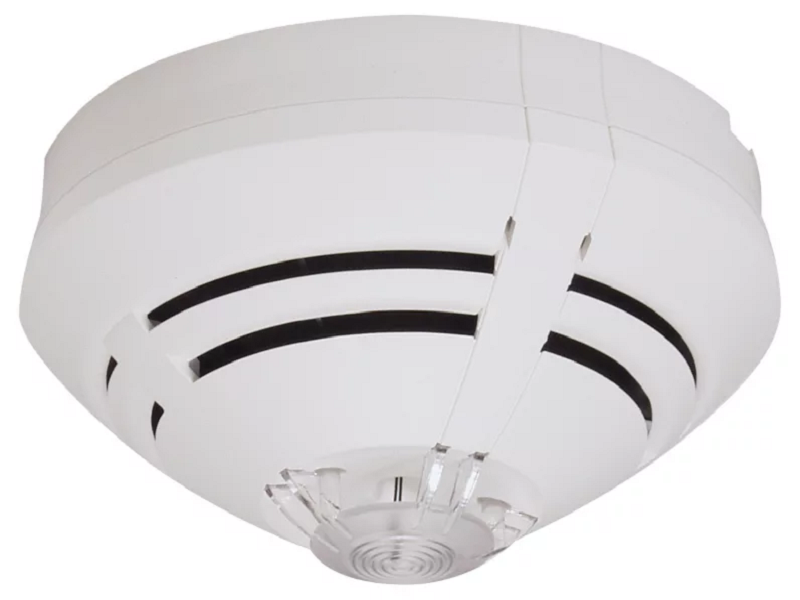

Optical Smoke Detector
| Feature | Details |
|---|---|
| Product Name | Optical Smoke Detector |
| Type | Photoelectric Smoke Detector |
| Detection Method | Light scattering (infrared sensor) |
| Function | Detects visible smoke particles |
| Power Supply | 12V / 24V DC (system dependent) |
| Compatibility | Conventional & Addressable systems |
| Indication | LED status (alarm & normal) |
| Application | Indoor fire detection |
| Installation | Ceiling-mounted |
Description
An Optical Smoke Detector, also known as a photoelectric smoke detector, is a highly reliable fire detection device designed to identify visible smoke particles generated by slow-burning or smoldering fires. It operates using the light scattering principle, where an infrared light source and a sensor are housed inside a detection chamber. Under normal conditions, the light beam does not reach the sensor; however, when smoke enters the chamber, it scatters the light, causing it to strike the sensor and trigger an alarm signal.
Optical smoke detectors are particularly effective in detecting fires that produce thick smoke before flames develop, such as those involving upholstery, wiring, or electrical equipment. They are widely used in residential buildings, offices, hotels, hospitals, and commercial spaces due to their high sensitivity and low false alarm rates compared to ionization detectors.
These detectors are available in both conventional and addressable variants. In addressable systems, each detector has a unique ID, allowing the control panel to pinpoint the exact location of the fire. Most models include LED indicators for visual status, showing normal operation, alarm condition, or fault status. They are typically installed on ceilings to ensure maximum coverage and performance.
Designed in compliance with fire safety standards such as EN54 and IS codes, optical smoke detectors offer dependable performance, easy maintenance, and long-term reliability. Their advanced sensing technology makes them an essential component of modern fire alarm systems, ensuring early fire detection and enhanced life safety.
Related products
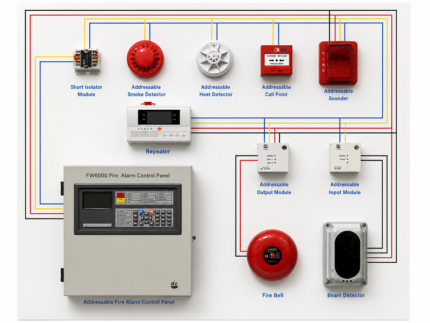
Addressable Fire Alarm System
| Feature | Details |
|---|---|
| System Type | Addressable Fire Alarm System |
| Coverage | Device-level identification |
| Detection | Smoke, heat, flame detectors, MCP |
| Installation | Advanced and scalable |
| Ideal For | Large buildings & complex facilities |
| Indication | Exact device location detection |
| Maintenance | Easy fault detection & monitoring |
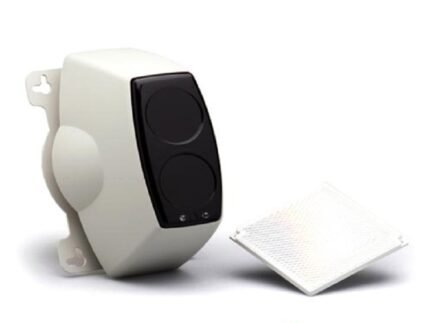
Beam Detector
| Feature | Details |
|---|---|
| Product Name | Beam Detector |
| Type | Optical Beam Smoke Detector |
| Detection Method | Infrared light beam interruption |
| Range | Up to 100 meters (model dependent) |
| Function | Detects smoke over large open areas |
| Installation | Wall-mounted (transmitter & receiver) |
| Compatibility | Conventional & Addressable systems |
| Indication | LED / controller status display |
| Application | Warehouses, malls, factories |
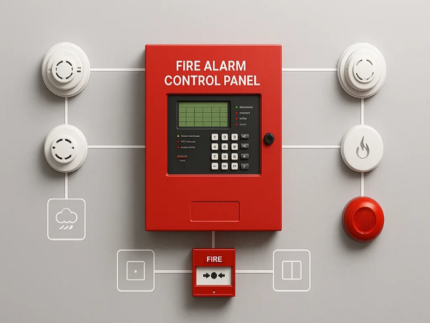
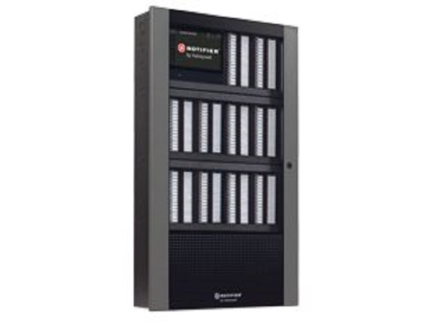
Inspire Fire Alarm Control Panel
| Feature | Details |
|---|---|
| Product Name | INSPIRE Fire Alarm Control Panel |
| Type | Intelligent Addressable Fire Alarm Panel |
| Brand | Notifier by Honeywell |
| System Capacity | Up to 3,180 addressable devices |
| Loop Capacity | 1 to 10 SLC loops |
| Display | 10-inch color touchscreen |
| Design | Modular & scalable architecture |
| Connectivity | Network-enabled (LAN/WAN, cloud-ready) |
| Integration | Voice evacuation & firefighter telephone |
| Application | Small to large infrastructure |
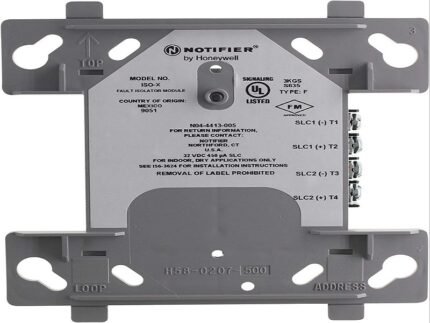
ISO-X Isolator Module
| Feature | Details |
|---|---|
| Model | ISO-X Isolator Module |
| Type | Fault Isolator Module |
| Brand | Notifier (Honeywell) |
| Function | Protects SLC loop from short circuits |
| Power Supply | Powered directly from SLC loop |
| Indication | LED status indicator |
| Compatibility | ONYX & CLIP series panels |
| Wiring Support | Style 4, 6, 7 |
| Application | Addressable fire alarm systems |
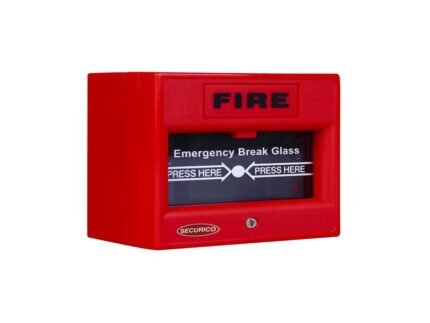
MCP Manual Call Point
| Feature | Details |
|---|---|
| Product Name | MCP (Manual Call Point) |
| Type | Fire Alarm Activation Device |
| Function | Manual fire alarm triggering |
| Operation | Break glass / push button |
| Mounting | Wall-mounted |
| Compatibility | Conventional & Addressable systems |
| Voltage | Typically 12V / 24V DC |
| Application | All types of buildings |
| Color | Red (standard fire safety color) |

NFS2-3030 Fire Alarm Control Panel
| Feature | Details |
|---|---|
| Model | NFS2-3030 Fire Alarm Control Panel |
| Type | Intelligent Addressable FACP |
| Series | ONYX Series (Notifier / Honeywell) |
| Loop Capacity | 1 to 10 SLC loops |
| Device Capacity | Up to 3,180 addressable devices |
| Display | 640-character LCD display |
| Application | Medium to large buildings |
| Networking | Supports LAN/WAN networking |
| Detection | Advanced intelligent sensing |
| Expansion | Modular & scalable design |

NFS2-3030 NFC Fire Alarm Control Panel
| Feature | Details |
|---|---|
| Model | NFS2-3030 NFC Fire Alarm Control Panel |
| Type | Intelligent Addressable Fire Alarm Panel |
| Series | ONYX Series (Notifier – Honeywell) |
| Loop Capacity | 1 to 10 SLC loops |
| Device Capacity | Up to 3,180 addressable devices |
| Display | 640-character LCD |
| Communication | LAN/WAN networking compatible |
| Integration | NFC (Notifier First Command) voice & emergency system |
| Application | Large & complex buildings |
| Special Feature | Advanced intelligent sensing & degraded mode |