

Fire Fighting System Installation in India: A Complete Guide for Homes, Offices & Industries

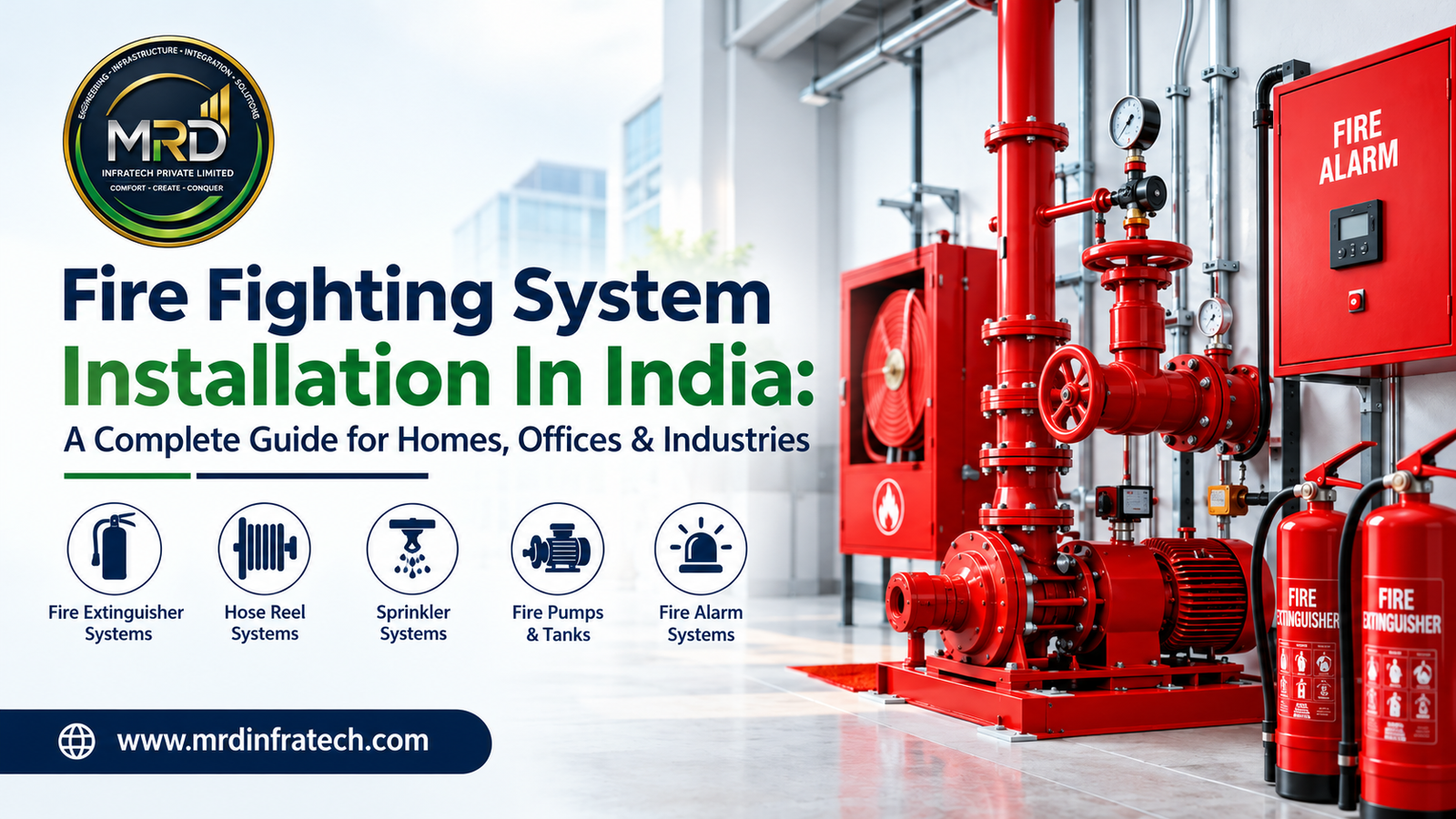
Fire accidents in India cause serious damage to property and lives every year, and most of them are preventable with the right protection in place. Whether you own an apartment, run a corporate office or manage a manufacturing unit, a properly designed Fire Fighting System is one of the most important investments you can make. It controls a fire in its early stage, gives people time to evacuate and limits damage until the fire brigade arrives. In this guide, we explain the types of systems, where each one fits, how installation works and how to choose the right partner.
Why a Fire Fighting System Is Essential in India
India’s rapid urbanisation has produced taller buildings, denser commercial complexes and larger industrial facilities. With more people and more electrical load under one roof, the risk of fire grows. Short circuits, overloaded wiring, flammable stock and human error are among the most common causes.
Legal and Safety Compliance
The National Building Code of India (NBC 2016, Part 4) sets out fire and life safety requirements. Most states also require a Fire NOC from the local fire department for commercial, industrial and high-rise residential buildings. Without proper installation, owners can face penalties, delays in occupancy approval and even insurance claim rejection. A Fire Fighting System designed to code protects you legally as well as physically.
Protecting Lives and Business Continuity
A fire does not only destroy assets. It halts operations, damages records and equipment, and can end a business entirely. A reliable setup contains the fire quickly, which means less downtime, lower repair costs and better peace of mind for occupants and employees.
Types of Fire Fighting System Installation
No single solution fits every building. A good installation combines several components, matched to the size, occupancy and risk level of the property.
Fire Hydrant System
A hydrant system uses a continuous, pressurised water supply through pipelines, pumps, hydrant valves and hose reels. It covers indoor and outdoor areas and is widely used in commercial, industrial and residential complexes. You can explore the Fire Hydrant System offered by MRD Infratech for more detail.
Sprinkler System
Automatic sprinklers activate when heat reaches a set temperature, releasing water directly over the fire zone. They suit offices, malls, hospitals, hotels and warehouses, where early automatic response is critical. Design typically follows standards such as IS 15105.
Fire Extinguishers and Hose Reels
Portable extinguishers are the first line of defence for small fires. Different classes (water, foam, CO2 and dry chemical powder) are used for different hazards such as paper, oil or electrical equipment. Hose reels give trained staff a quick way to tackle a growing fire.
Fire Detection and Alarm Integration
Suppression works best when paired with early detection. Addressable and conventional alarm panels, smoke detectors, heat detectors and manual call points alert occupants within seconds. At MRD Infratech, the Fire Detection System range pairs with suppression equipment so the entire safety setup works as one unit.
Fire Fighting System for Homes, Offices and Industries
Requirements change depending on how a building is used. Here is how the approach differs.
Homes and Residential Societies
Individual homes usually need extinguishers, smoke detectors and clear evacuation routes. Apartment towers and gated societies need much more: wet risers, hydrants, sprinklers in common areas, pump rooms and alarm panels. Because many residents share the building, a well-maintained Fire Fighting System is essential for collective safety.
Offices and Commercial Buildings
Offices contain dense wiring, servers, documents and large numbers of people. Sprinklers, smoke detection, voice alarm and emergency lighting are standard. Server rooms may also need gas-based suppression so equipment is protected without water damage.
Industries and Warehouses
Factories and godowns handle flammable materials, machinery and high-value stock. They typically need high-capacity pumps, yard hydrants, foam or deluge systems and heat detection built around the specific hazard. Industrial sites also need regular drills, because a Fire Fighting System is only as effective as the people trained to use it.
The Fire Fighting System Installation Process
Professional installation follows a clear sequence. Knowing it helps you plan timelines and budgets.
- Site survey and risk assessment: Engineers study the building layout, occupancy, fire load and local regulations.
- System design: Water demand, pump capacity, pipe routing and device placement are calculated and drawn up.
- Material selection: Approved pipes, valves, pumps, sprinklers and panels are chosen for durability and compliance.
- Installation: Pipelines, hydrants, sprinklers, detectors and control panels are fitted with minimal disruption to daily operations.
- Testing and commissioning: Pressure tests, flow tests and alarm checks confirm that everything performs as designed.
- Documentation and handover: You receive drawings, test reports and operating guidance, which also support your Fire NOC application.
Skipping any of these steps often leads to failures at inspection or, worse, during a real emergency.
How to Choose the Right Fire Fighting System Provider
The quality of installation matters as much as the equipment itself. Look for these qualities in a provider:
- Experience across sectors: A team that has worked on residential, commercial and industrial projects understands varied needs.
- End-to-end service: Design, supply, installation, testing and maintenance from one partner avoids gaps and finger-pointing.
- Trusted technology brands: Genuine components from established manufacturers improve reliability.
- Compliance knowledge: The provider should know NBC norms and help with documentation for approvals.
- After-sales support: Fire safety needs ongoing attention, so responsive service is important.
MRD Infratech Private Limited is a Delhi-based engineering and technology integration firm delivering ELV and life safety solutions for industrial, commercial and residential clients. Its team handles projects from concept to commissioning, with customised system design and integration across multiple technology platforms. You can browse the full Fire Fighting Systems category to see what is available.
Maintenance: Keeping Your System Ready
Installation is only the beginning. Even the best fire fighting system can fail if it is neglected. Follow a simple maintenance routine:
- Inspect extinguishers monthly and refill them on schedule.
- Run pumps and test pressure regularly.
- Check sprinkler heads and valves for blockage or corrosion.
- Test alarm panels and detectors periodically.
- Conduct fire drills at least twice a year.
Signing an annual maintenance contract (AMC) with your installer is the easiest way to keep everything compliant and ready.
Conclusion
Fire protection is not a place to cut corners. From hydrants and sprinklers to detection and alarms, every component plays a role in saving lives and protecting your investment. By understanding your building’s needs, following the right standards and working with an experienced installer, you can build a safety setup you can rely on. If you are planning a new installation or upgrading an existing one, MRD Infratech can help you design and implement a Fire Fighting System tailored to your property.