
Access Control System in India: Types, Features & How to Choose the Right One

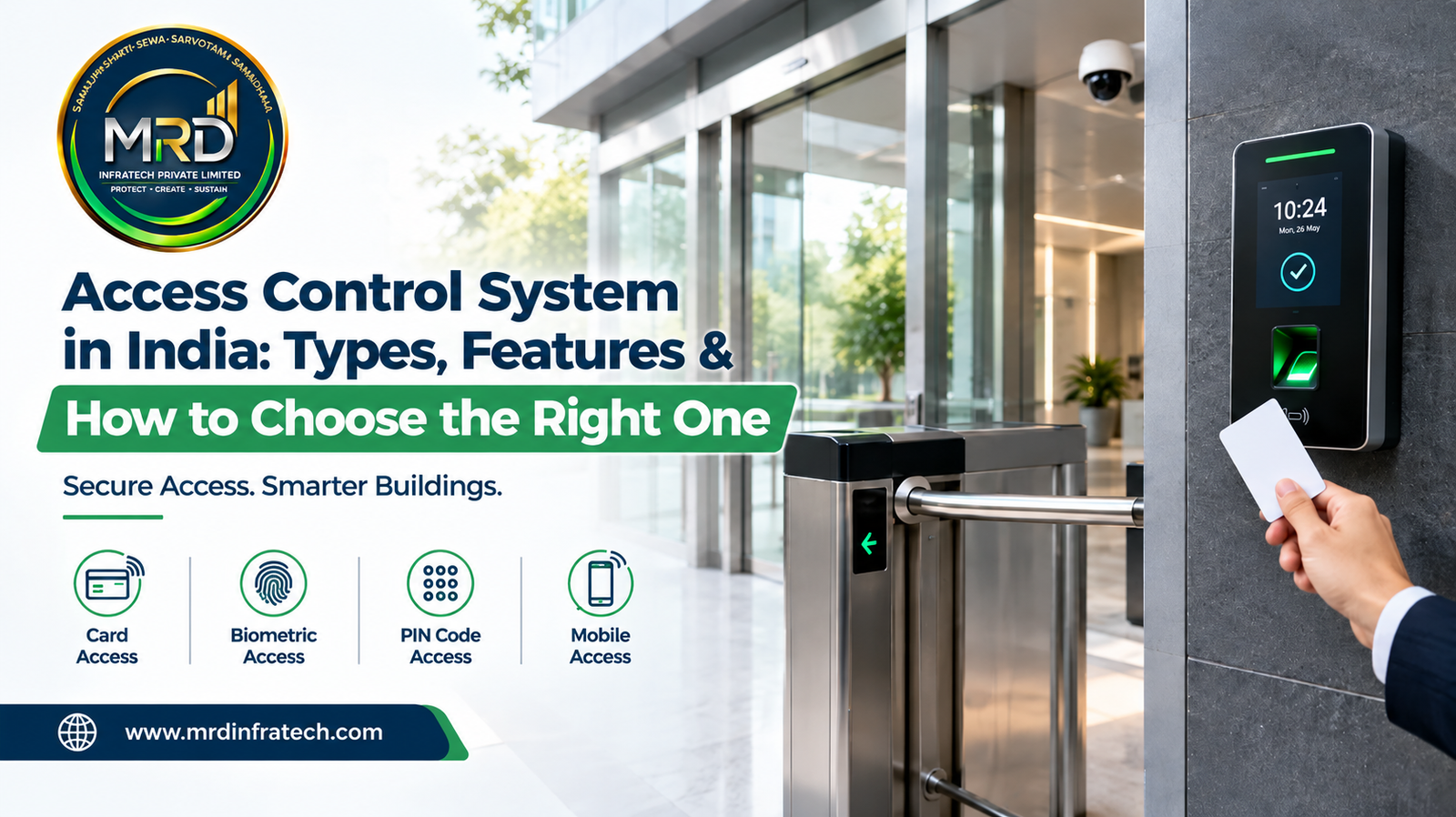
Every property in India, from a Delhi apartment tower to a Pune factory, has the same basic question: who gets in, where, and when? A modern Access Control System answers it automatically. It replaces loose keys and handwritten visitor registers with a secure, trackable and scalable method of managing entry. This guide covers how these systems work, the main types, the features that matter, and how to choose the right one for your building.
What Is an Access Control System and How Does It Work?
An access control system is a security solution that grants or denies entry to a building, floor or room based on verified credentials. A person presents a card, fingerprint, face or mobile credential at a reader. The reader sends the data to a controller, which checks it against stored permissions and unlocks the door only if the person is authorized.
Every attempt, successful or not, is logged with a time stamp. A well-designed Access Control System therefore gives you control and a complete audit trail. You can see who entered the server room last night or which employee was in the warehouse after hours.
The main components are:
- Credentials: cards, fingerprints, faces, PINs or smartphones
- Readers: devices installed at entry points
- Controllers: the “brain” that makes the allow/deny decision
- Locks: electromagnetic locks, strike locks or motorized barriers
- Software: the dashboard for managing users, schedules and reports
Why Businesses and Homes in India Need Access Control
India’s commercial and residential spaces are growing fast, and traditional security is struggling to keep up. Lost keys mean expensive lock changes, security guards can’t be everywhere, and paper registers are easy to falsify. Access control solves these problems while also helping with attendance tracking, visitor management and compliance in sensitive areas such as hospitals, data centers and pharma units.
Types of Access Control System
Choosing the right technology starts with understanding the main options. Here is how the most common types compare.
Card-Based Access Control
RFID and proximity card readers are the most widely used option in Indian offices and apartment complexes. Cards are cheap, quick to issue and easy to deactivate when lost. The downside is that cards can be shared or duplicated, so they suit areas with moderate security needs.
Biometric Access Control System
A Biometric Access Control System verifies identity using fingerprints, iris patterns or facial recognition. Because these traits can’t be lent or stolen, biometrics offer a higher level of certainty. Face recognition is increasingly popular because it is contactless and fast, which makes it a good fit for busy entrances, hospitals and clean-room environments. Many organizations also use biometrics for attendance, so one device handles two jobs.
Keypad and PIN-Based Systems
These systems work with a numeric code. They are simple and low-cost, but codes are easily shared, so they work best as a second layer of authentication, not the only one.
Mobile and Cloud-Based Access Control
Smartphone credentials using Bluetooth or NFC are growing quickly. Administrators can add or revoke access remotely from anywhere, which is useful for multi-site businesses, co-working spaces and gated societies.
Boom Barriers and Turnstiles
For parking areas, campuses and large lobbies, barriers and turnstiles control the flow of vehicles and people. They are usually integrated with card or biometric readers.
Key Features to Look for
Not every system is built the same, and the right features depend on how you will use it. The most important ones are:
- Scalability: the system should grow from five doors to fifty without replacing the core hardware.
- Multi-factor authentication: combining card plus fingerprint, for example, for high-security zones.
- Time and zone scheduling: restricting access by shift, day or department.
- Real-time alerts: instant notifications for forced doors, held-open doors or repeated failed attempts.
- Detailed reporting: exportable logs for audits, HR and investigations.
- Power backup and offline mode: doors should keep working during outages and network failures.
- Fire safety integration: locked doors must release automatically during an alarm so people can evacuate safely.
How to Choose the Right Access Control System in India
Buying on price alone is the most common mistake. Use this checklist before you decide.
1. Assess your risk level. A reception area and a server room do not need the same protection. Map your premises into zones and match the technology to each one.
2. Count users and entry points. The number of people, doors and locations affects both hardware and software licensing.
3. Check integration. The best solutions work with CCTV, fire alarms and building automation. When your cameras, doors and alarms talk to each other, you can verify an alert on video in seconds. You can learn more in our guides on CCTV surveillance and building management systems in India.
4. Think about the total cost. Include installation, cabling, software, maintenance and future expansion, not just the price of the readers.
5. Choose an experienced installer. Even great hardware fails when it is poorly installed. Cabling, door hardware and controller placement decide whether the system is reliable day to day. Look for a provider with proven project experience and responsive after-sales support.
6. Plan for compliance and safety. Make sure the setup respects fire exit norms and data privacy, especially when storing biometric information.
Where Access Control Delivers the Most Value
- Corporate offices: controlled entry, attendance and visitor tracking.
- Residential societies: secure gates, resident cards and visitor approvals.
- Hospitals: restricted zones for ICUs, pharmacies and labs.
- Factories and warehouses: shift-based access and protection of high-value inventory.
- Data centers: multi-layer authentication and detailed audit logs.
Why Choose MRD Infratech
MRD Infratech Private Limited is an engineering and technology integration firm delivering end-to-end ELV and life safety solutions for industrial, commercial and residential sectors. From our Rohini, Delhi base, our certified team handles everything from system design to commissioning and maintenance. We offer multi-OEM integration, so your doors, cameras and alarms work together as one platform, and we work with trusted technology brands such as Honeywell. You can explore our full range of access control and security solutions or read our guide to ELV systems in New Delhi.
Frequently Asked Questions
How much does an Access Control System cost in India?
Costs vary widely with the number of doors, the technology and the software. A single-door card system is far cheaper than a multi-site biometric setup. A site survey is the only way to get an accurate figure.
Can it work with my existing CCTV and fire alarm?
Yes, in most cases. Integration is one of the biggest advantages of working with a multi-OEM specialist.
How long does installation take?
A small office can be completed in a few days. Larger projects take weeks, depending on cabling and the number of doors.
Final Thoughts
Security today is about smart control, not just locks. A properly planned Access Control System protects people, assets and information while giving you data to run your premises more efficiently. Match the technology to your risk level, insist on scalability and integration, and choose an installer you can rely on for the long term.