Professional Video Wall Installation in Greater Noida: What to Know Before You Buy

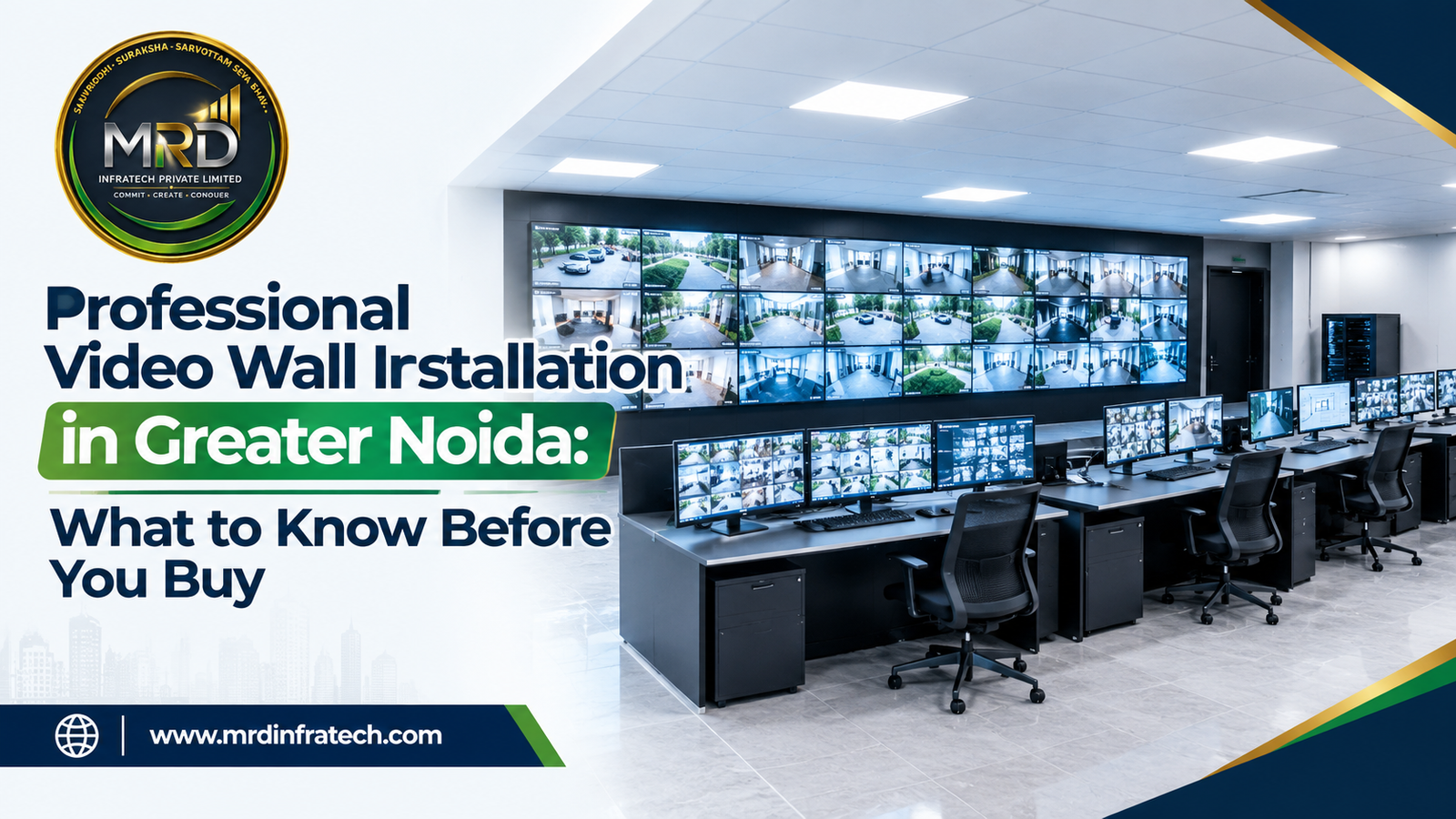
Greater Noida is growing fast, with new corporate offices, data centers, showrooms, hospitals and industrial units opening every year. As these spaces become more connected, large-format displays are no longer a luxury. A well-planned Video Wall Installation turns separate screens into one sharp, seamless display that can run a control room, greet visitors or showcase your products. But choosing the wrong panels or skipping proper planning can cost you money, performance and years of frustration. This guide explains what to know before you buy, so you can invest with confidence.
Why Video Wall Installation Matters for Greater Noida Businesses
A video wall combines multiple displays into one large canvas. Unlike a projector, it stays bright in well-lit rooms, runs for long hours and can be expanded as your needs grow. That is why businesses across Greater Noida use them in everything from corporate lobbies to 24/7 monitoring rooms.
However, the display is only half the story. Professional Video Wall Installation covers the mounting structure, precise panel alignment, signal routing, power backup, cable management and ventilation. When these details are handled poorly, you get visible seams, color mismatch between panels, overheating and frequent downtime. When they are handled well, the wall looks flawless and works reliably for years.
Where Video Walls Are Commonly Used
Video walls fit a wide range of spaces. The most common are:
- Security and CCTV control rooms
- Corporate boardrooms and reception areas
- Retail stores, showrooms and malls
- Hospitals and command centers
- Industrial plants and SCADA monitoring rooms
- Educational institutions and auditoriums
- Hotels, banquet halls and event venues
Each setting has different viewing distances, brightness needs and content types, which is why a one-size-fits-all approach rarely works.
Key Things to Know Before You Buy a Video Wall
Before you request quotes, it helps to understand the main decisions that affect both price and performance.
LCD vs LED Video Walls
Narrow-bezel LCD video walls are popular for control rooms and indoor spaces where viewers sit relatively close. They offer sharp text, accurate color and a lower entry cost. Direct-view LED walls have no bezels at all, so the image is completely seamless, and they can be built to almost any size or shape. They suit large lobbies, auditoriums and high-ambient-light areas, but they usually cost more. Your viewing distance, room size and budget should guide the choice.
Bezel Size, Pixel Pitch and Resolution
For LCD walls, a thinner bezel means less visible separation between screens. For LED walls, pixel pitch is the key number. It is the distance between pixels, and a smaller pitch gives a sharper image for close viewing. As a rule of thumb, the closer your audience, the finer the pitch you need. Paying for more resolution than the viewing distance requires is a common way to overspend.
Controllers, Software and Content Management
The controller is the brain of the wall. It splits, scales and arranges content across all panels. Ask whether it can handle multiple inputs at once, such as CCTV feeds, dashboards, presentations and live video. Good management software lets you create layouts, schedule content and control the wall remotely. If your wall will display surveillance feeds, make sure it integrates smoothly with your existing cameras and recorders.
Budget and Total Cost of Ownership
The sticker price is not the full cost. Factor in the mounting frame, controller, cabling, power backup, installation labor, content software and annual maintenance. Cheaper panels that are not rated for continuous operation often fail early and cost more in the long run. Ask every vendor for an itemized quote so you can compare like with like.
The Video Wall Installation Process, Step by Step
A reliable installation follows a clear process. Here is what a professional project typically looks like:
- Requirement analysis: Understanding the purpose, content type, audience and budget.
- Site survey: Measuring the wall, checking structural strength, power points, lighting and cable routes.
- Design and layout: Selecting panel size, grid configuration and controller, with a visual mock-up where possible.
- Mounting and alignment: Fixing the frame and aligning each panel to the millimeter.
- Cabling and integration: Connecting signal sources, power and network, and integrating with other systems.
- Calibration and testing: Matching color and brightness across panels and running stress tests.
- Training and handover: Teaching your team to operate the wall, with documentation and support details.
Following these steps, a properly executed Video Wall Installation avoids the surprises that usually appear when work begins without a site survey.
Common Video Wall Installation Mistakes to Avoid
Many problems come from avoidable errors. Watch out for these:
- Ignoring ventilation: Panels generate heat, and poor airflow shortens their life.
- Weak mounting structure: The wall must support the full weight with a safety margin.
- No power backup: A sudden outage can damage equipment or disrupt critical monitoring.
- Mismatched panels: Mixing batches or models leads to visible color differences.
- Skipping service access: Panels should be reachable for maintenance without dismantling the wall.
A trusted team plans for each of these from day one. Choosing a provider based only on the lowest price often leads to a poorly finished Video Wall Installation that needs costly rework within a year.
Why Choose MRD Infratech for Your Video Wall Project
MRD Infratech Private Limited is a premier engineering and technology integration firm delivering end-to-end ELV and life safety solutions. Our team designs, installs and maintains systems for industrial, commercial and residential clients across Delhi NCR, including Greater Noida. That experience matters because a video wall rarely works alone. It often connects to CCTV surveillance, access control, networking and building management systems.
What sets us apart:
- Customized system design based on your exact requirements
- Experienced, certified engineers
- Seamless integration across multiple technology platforms
- Complete project management from concept to commissioning
- Reliable after-sales support and maintenance
Whether you need a compact display for a boardroom or a large wall for a monitoring center, we help you choose the right technology and deliver a clean, dependable result.
Final Thoughts
A video wall is a long-term investment, so the right decisions at the start save time, money and headaches later. Understand your viewing needs, compare LCD and LED honestly, insist on a proper controller and plan for maintenance. Most importantly, work with a team that treats Video Wall Installation as a complete engineering project, not just a screen delivery.