

Smarter Buildings Start Here: Building Management System in India for Modern Properties

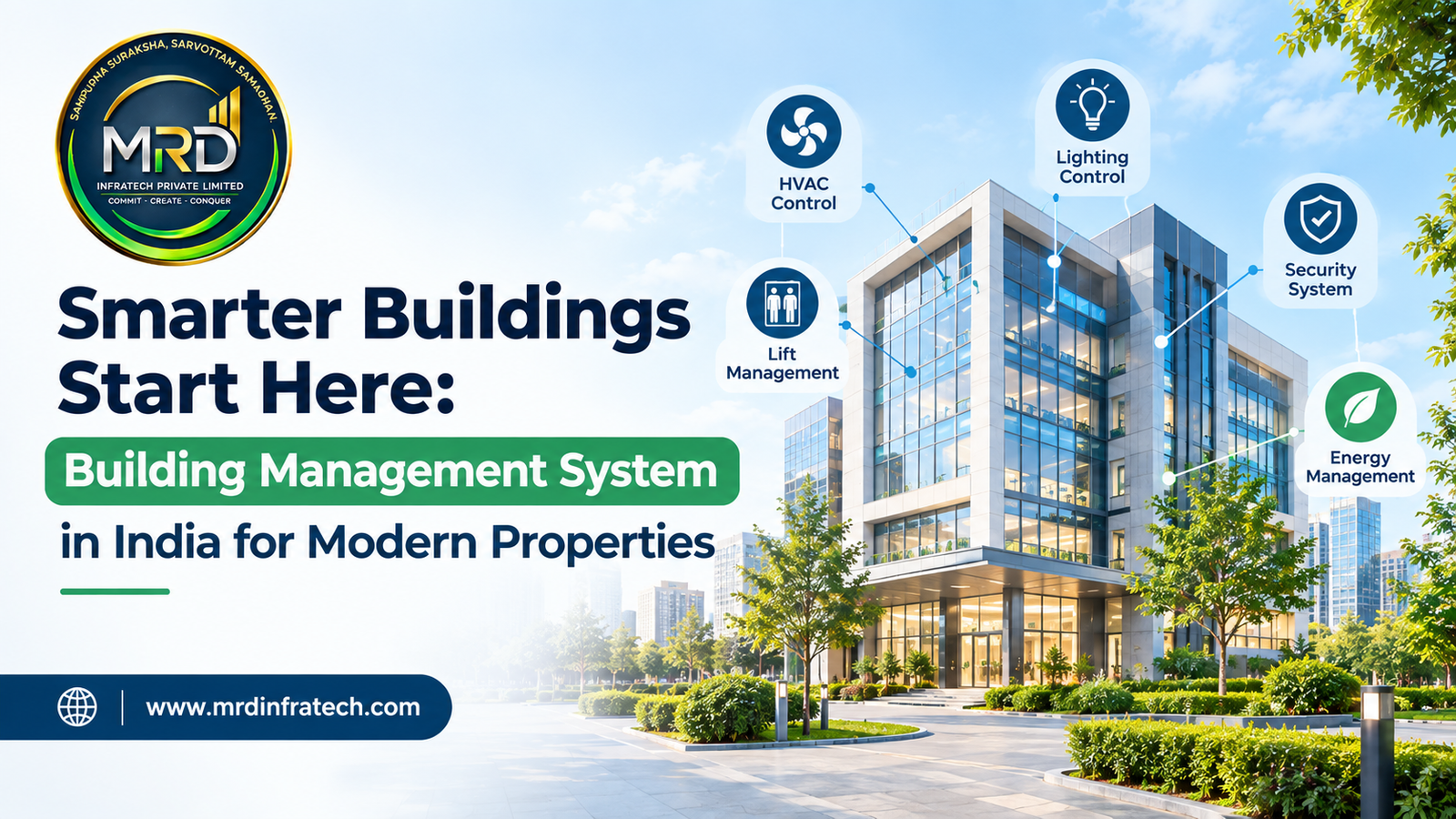
Walk into any modern office tower, hospital or data center in India and you will find the same hidden advantage: a central brain that keeps everything running. Rising electricity tariffs, stricter safety norms and tenants who expect comfort have made manual operations a costly habit. A Building Management System replaces guesswork with real-time control, giving owners and facility teams one dashboard for lighting, cooling, security and more.
This guide explains what a BMS does, why it matters for Indian properties, and how to choose the right solution for your building.
What Is a Building Management System?
A BMS, also called a building automation system, is a computer-based control network that monitors and manages a building’s mechanical and electrical equipment. Sensors, controllers and software work together so that equipment responds to actual conditions rather than fixed schedules. Instead of a technician walking the premises to switch off an air conditioner or check a pump, the Building Management System does it automatically and reports back. Every reading is logged, which gives managers data to work with.
Core Components of a BMS
A typical installation includes four layers:
- Field devices: temperature, humidity, CO₂, occupancy and flow sensors, plus actuators and valves.
- Controllers: direct digital controllers (DDC) that process sensor data and execute commands.
- Communication network: protocols such as BACnet, Modbus or LonWorks that let different equipment talk to each other.
- Supervisory software: the dashboard where operators view live status, receive alerts and generate reports.
Because open protocols are widely supported, a well-designed system can connect equipment from different manufacturers without being locked into one brand.
Systems a BMS Can Control
The real value comes from integration. One platform can oversee:
- HVAC: chillers, air handling units and fans adjust to occupancy and weather, which is critical in India’s hot climate.
- Lighting: schedules, daylight sensors and occupancy detection switch lights off in empty areas.
- Fire and life safety: alarm panels and detectors report to the same console, speeding up emergency response.
- Access control and CCTV: entry logs and camera feeds can be viewed alongside other building data.
- Water and pumping: tank levels, pump status and leak alerts are tracked continuously.
- Energy metering: sub-meters show where power is going, floor by floor or tenant by tenant.
When these systems share information, new possibilities open up. A fire alarm can automatically unlock exit doors, shut down air handlers and bring up the nearest camera on screen.
Why Indian Properties Need Automation Now
Rising Energy Costs
Commercial electricity is a major operating expense, and HVAC alone often accounts for a large share of consumption. A BMS trims waste by running equipment only when and where it is needed, optimizing set points and flagging devices that draw more power than expected. Many properties see meaningful savings once the system is tuned.
Green Building and Compliance Goals
Developers across India are targeting IGBC, LEED and GRIHA ratings, and energy-conservation codes such as ECBC are pushing buildings toward measurable efficiency. Automation provides the monitoring and reporting these frameworks rely on, making documentation far easier.
Better Comfort and Productivity
Stable temperatures, good air quality and well-lit spaces make occupants more comfortable. In offices, that supports productivity. In hospitals and hotels, it directly affects patient and guest experience.
Fewer Breakdowns, Lower Maintenance Costs
Instead of waiting for equipment to fail, the system tracks run-hours, pressure and temperature trends. Early warnings let teams schedule repairs before a breakdown disrupts operations. Over time, this extends equipment life and reduces emergency call-outs.
Key Benefits at a Glance
Centralized control is the first major gain, since you can manage multiple floors or even multiple sites from one screen. Energy savings follow, because automated scheduling and optimization reduce wasted power. Faster response comes next, as instant alarms mean problems are handled in minutes, not hours. Data-driven decisions are also easier, since trend reports reveal inefficiencies and guide upgrades. Finally, a smart, efficient building attracts better tenants and commands stronger rents.
Smarter Energy Management
Energy is where most owners see the clearest return. A properly configured Building Management System can set back temperatures after hours, stagger equipment start-up to avoid peak-demand charges, and compare consumption against benchmarks. Combined with sub-metering, it also supports fair tenant billing. Facility managers can see exactly which equipment is responsible for a spike and fix it, rather than discovering the problem on next month’s bill.
Where a BMS Delivers the Most Value
While any larger property can benefit, the strongest cases are:
- Commercial offices and IT parks, with large HVAC loads and long operating hours.
- Hospitals, with strict environmental control and critical safety systems.
- Hotels and hospitality, where guest comfort must be balanced with efficiency.
- Data centers, which need precision cooling and constant monitoring.
- Malls and retail complexes, with complex lighting, cooling and crowd-safety needs.
- Industrial facilities and campuses, with many buildings, pumps and utilities to supervise.
How to Choose the Right BMS Partner in India
The technology matters, but the quality of design, installation and support matters just as much. When comparing providers, a reliable Building Management System partner should be able to answer the following clearly.
First, define your goals. Are you chasing energy savings, certification, tighter security or simply easier operations? Clear goals shape the design. Second, insist on open protocols such as BACnet and Modbus, which prevent vendor lock-in and make future expansion easier. Third, plan for scalability, so you can add floors, buildings or equipment without a complete rebuild.
Fourth, check installation and commissioning expertise. A well-engineered system can still underperform if it is poorly installed or never properly tuned, so ask about testing procedures and handover documentation. Fifth, look for strong after-sales support, including annual maintenance contracts, remote monitoring and quick service response. Sixth, ask for references from buildings similar to yours in size and use. Finally, consider cybersecurity, because connected systems need secure networks, user-access controls and regular software updates.
Common Mistakes to Avoid
- Buying on price alone. The cheapest quote often leaves out commissioning, training or support.
- Skipping staff training. Even the best system fails if operators do not know how to use it.
- Ignoring existing equipment. Check what can be integrated before replacing it.
- Treating it as a one-time project. A BMS needs periodic tuning as occupancy and usage change.
The Future of Smart Buildings in India
India’s real estate sector is moving quickly toward smart infrastructure. Expect more cloud-based dashboards, AI-driven analytics that predict equipment faults, and tighter links with solar, EV charging and battery storage. Properties that adopt automation today will find it far easier to add these capabilities later.
Final Thoughts
A Building Management System is no longer a luxury reserved for landmark towers. For offices, hospitals, hotels, factories and residential complexes, it is a practical tool that cuts energy waste, improves safety, reduces maintenance headaches and boosts long-term property value. The key is choosing a partner who understands your building, designs the system around your goals and supports it long after handover.