

High Quality ELV System in New Delhi: A Complete Guide for Homes, Offices & Commercial Buildings

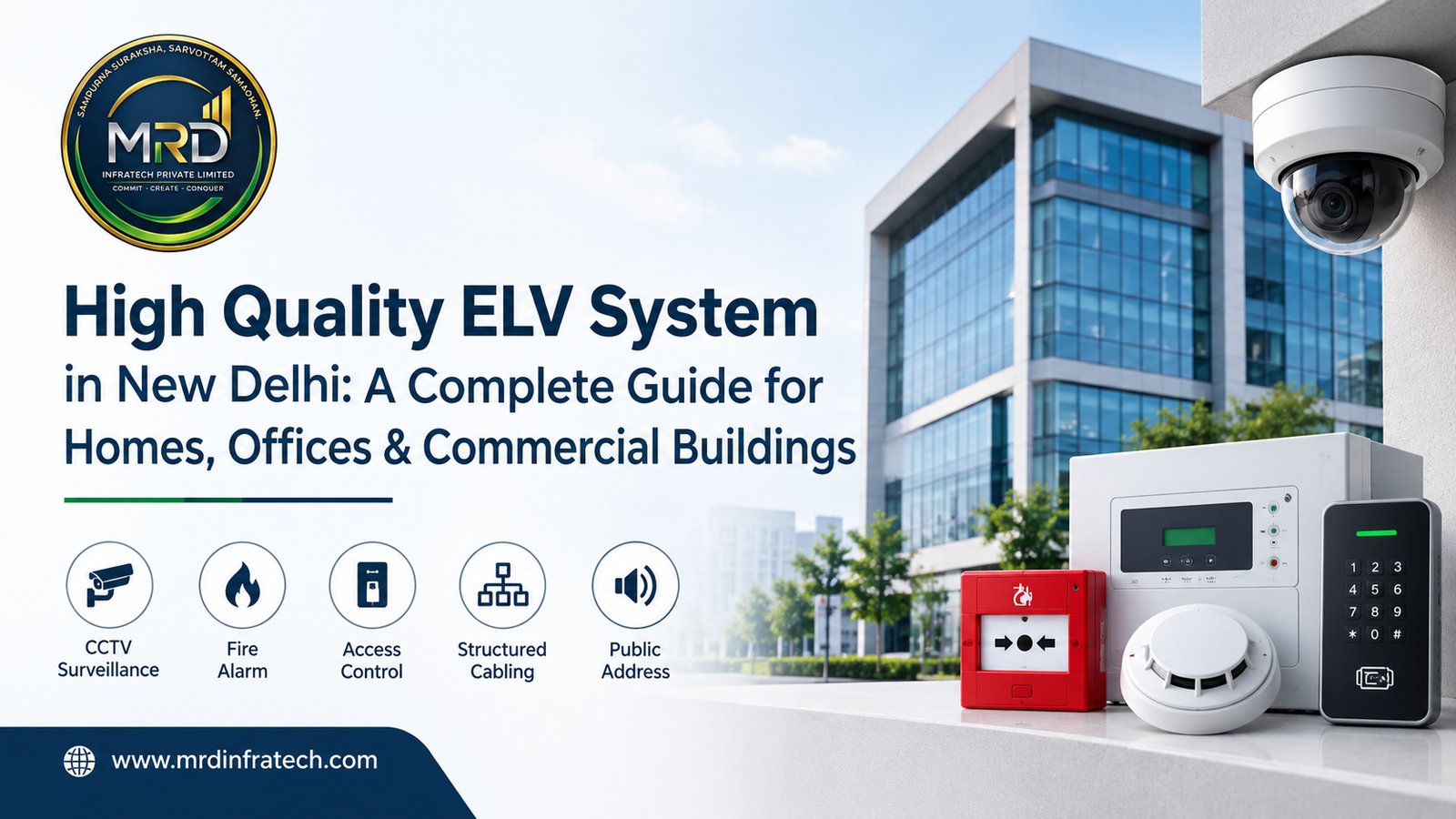
Delhi is growing both vertically and digitally. Apartments in Dwarka, glass-fronted offices in Connaught Place and Nehru Place, and large commercial complexes across NCR all depend on electronic systems that keep people safe and operations running. Most of these systems sit on an ELV (Extra Low Voltage) network. Investing in a High Quality ELV System is no longer a luxury. It is the foundation of modern security, communication and building control. This guide explains what ELV systems are, what they include, and how to choose the right one for your property in New Delhi.
What Is an ELV System?
ELV stands for Extra Low Voltage. It covers electrical systems that run at very low voltage, usually below 50V AC, and carry data, signals and control commands rather than heavy power. Think of them as the nervous system of a building. They sense, communicate and respond.
Unlike conventional wiring, which powers lights and appliances, ELV systems handle security, networking, safety and communication. They are usually installed alongside electrical and HVAC work, and when planned well they work together as one coordinated setup instead of separate, disconnected gadgets.
Core Components of an ELV System
A complete ELV setup is made up of several subsystems. Which ones you need depends on the size and purpose of your property.
CCTV and Video Surveillance
IP cameras, NVR recorders and remote viewing let you monitor entrances, parking areas, corridors and work floors around the clock. Modern systems add motion detection, night vision and cloud or mobile access.
Access Control
Card readers, biometric devices and keypad locks control who enters which area. They also create a digital log of movement, which helps with security audits and attendance tracking.
Fire Alarm and Detection
Smoke and heat detectors, manual call points and control panels give early warning of fire. In commercial buildings, these systems are tied to safety regulations and are not optional.
Structured Cabling and Networking
Cat6 or fibre cabling, racks and switches form the backbone that carries data for every other system. Poor cabling is a common cause of slow, unreliable networks.
PA, Intercom and Video Door Phones
Public address systems, intercoms and video door phones handle announcements, internal calls and visitor verification, which suits residential societies and large offices.
Building Management System (BMS)
A BMS brings lighting, air conditioning, power and security onto one dashboard, helping with remote monitoring and lower energy bills.
Why a High Quality ELV System Matters in New Delhi
Delhi’s conditions are demanding. Summer temperatures are extreme, dust levels are high, power fluctuations are common, and many buildings are densely occupied. Cheap or poorly installed systems struggle in these conditions. Cameras fail in the heat, cables degrade, and recorders lose footage just when you need it. This is why a High Quality ELV System is a practical necessity in the capital and not just an upgrade.
Security needs are also rising. Residential societies, retail outlets, hospitals, schools and corporate offices all face pressure to protect people and property. A dependable setup gives you:
- Better protection against theft, trespassing and internal misuse
- Faster response during emergencies
- Reliable evidence when incidents occur
- Lower long-term maintenance costs
- Smoother day-to-day operations
A weak system gives a false sense of safety. When it fails at a critical moment, the cost of the incident usually exceeds whatever you saved on installation.
Signs of a High Quality ELV System
How can you tell a good installation from a poor one? A High Quality ELV System shows these markers:
- Certified, branded components that meet recognised standards, such as ONVIF interoperability for cameras and proper cabling standards for networks.
- Proper design before installation, with a site survey, layout drawings and a clear list of requirements before any wiring begins.
- Neat, labelled cabling, with clean routing and correct conduits that make future maintenance far easier.
- Scalability, so more cameras, readers or devices can be added later without a complete rebuild.
- Integration between subsystems, for example a fire alarm that unlocks doors or a camera that triggers on an access alert.
- Thorough testing and handover, with every device tested and documented and your team trained to use it.
- After-sales support, since warranty, maintenance contracts and quick service response matter as much as the hardware.
ELV Solutions for Homes, Offices and Commercial Buildings
Each type of property has different priorities, so a one-size-fits-all package rarely works.
For Homes and Residential Societies
Homeowners usually want video door phones, CCTV at entry points, smart locks and a reliable Wi-Fi backbone. Gated communities add boom barriers, visitor management, intercom between flats and the gatehouse, and perimeter surveillance. Simplicity matters here, since family members should find the system easy to use.
For Offices
Offices need secure networking, access control for restricted zones, CCTV across work areas and entrances, and conference-room communication. Integrating access control with attendance records saves administrative effort, and good structured cabling prevents the network slowdowns that hurt productivity.
For Commercial Buildings
Malls, hotels, hospitals, showrooms and large complexes need the full range: surveillance, fire alarm, PA, BMS, access control and heavy-duty networking. Because these buildings are large and busy, centralised monitoring from a control room becomes essential, and compliance with fire and safety norms is mandatory. At this scale, only a High Quality ELV System can keep every subsystem reliable and working together.
How the Installation Process Works
A professional ELV project typically follows these steps:
- Requirement analysis: understanding your property, risks, budget and future plans.
- Site survey: inspecting the building to decide device placement, cable routes and power needs.
- System design: preparing layouts, a bill of quantities and technical specifications.
- Procurement and installation: supplying tested products and installing them with minimal disruption.
- Testing and commissioning: verifying every device and every integration.
- Training and handover: showing your team how to operate the system and providing documentation.
- Maintenance: regular inspections and prompt support to keep everything running.
Common Mistakes to Avoid
- Choosing purely on price. The lowest quote often hides inferior cables, unbranded devices or skipped testing.
- Skipping the planning stage. Adding cameras and cabling without a design leads to blind spots and rework.
- Ignoring future growth. A system that cannot expand soon becomes obsolete.
- Neglecting maintenance. Even good systems need periodic checks, firmware updates and cleaning.
- Working with unqualified installers. Poor workmanship causes more failures than faulty equipment does.
Choosing the Right ELV Partner in New Delhi
The installer is as important as the equipment. Ask for details of past projects, check which brands they work with, and confirm they offer design, installation and support under one roof. A good partner will explain options clearly, give a transparent quotation and stand behind their work after handover.
If you are planning a new project or upgrading an old setup in Delhi NCR, speak with the team at MRD Infratech to discuss your requirements and get a tailored plan.
Conclusion
Security, connectivity and safety now depend on well-planned low-voltage infrastructure. Whether you own a home, run an office or manage a commercial complex, a High Quality ELV System protects your people, your assets and your peace of mind. Focus on proper design, certified components, skilled installation and dependable support, and your investment will keep delivering for years. Start with a site assessment, define your needs clearly, and choose a partner who treats your property as seriously as you do.